
Seasons

As Germans, Italians and Bulgarians invade Greece, the Greek railways fall into the hands of the enemy.

We learn about the crucial role played by the Greek railway networks in warfare.

The network of the Piraeus-Athens-Peloponnese Railways had already begun to spread in the early 1880s.

Due to the rapid growth in the Peloponnese region, the need for the development of a land-based means for the speedy and mass transport of products becomes evident.

The liberation of Thessaly from the Ottoman rule will prove a fertile ground for the development of both rich agriculture in the region and an extensive commercial network.
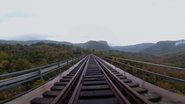
Such a long distance is now covered by train in just 4 hours, forming one of the most important transport routes in Greece.

Two different routes. Two different railway networks. Two different railway companies. Two different railway destinations in Gevgeli and Monastiri. A common starting point. Thessaloniki.

Follow us on a journey through enchanting landscapes filled with colours and history, as we travel along the Ottoman networks of the Connecting Railway and the Eastern Railways.

We learn about telecommunications rail networks and their importance for rail travel.

At the beginning of the 20th century, the city of Thessaloniki is linked to Istanbul, to the Balkans and to Europe, through three different railway lines.
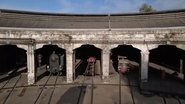
We follow the Attica Railways through time, from their glorious days with the amazing “Beast of Kifissia”, up to the decline of the network.

Description
It all starts on 1830, when young George Stephenson manufactures the first steam engine and the first railway networks are built soon after. Railway becomes a crucial factor in the development of trade and military strength for a country, with its ability to quickly transport soldiers and munitions. Railways expand rapidly in Europe and arrive soon in Greece.
-
Genres
-
CastKostis Savvidakis
-
Channel
-
Premiere DateFebruary 08, 2022
-
Rating9 (1)